
BMI Calculator - Check Your Body Mass Index Online
Quick Answer: What is BMI?
BMI (Body Mass Index) measures body fat based on height and weight.
Formula: BMI = weight (kg) / height (m)²
Healthy BMI Range: 18.5 – 24.9 for adults
Calculate your BMI in 30 seconds using our free tool below.
Fill in the form and click Calculate to see your BMI details.
Know About That Tool
Use our free BMI calculator to quickly determine your Body Mass Index and
understand whether you’re in a healthy weight range. Body Mass Index (BMI) is a widely used
screening tool that estimates body fat based on your height and weight. Developed in the 1830s
by Belgian mathematician Adolphe Quetelet, BMI remains the standard method used by healthcare
professionals worldwide to assess weight categories and potential health risks.
Our BMI calculator supports both metric (kg, cm) and imperial (lbs, feet/inches)
units, making it easy for anyone to use regardless of location. Simply enter your height and
weight, click calculate, and instantly see your BMI value along with your weight category
classification and personalized health recommendations.
Whether you’re tracking fitness goals, monitoring weight loss progress, or simply curious about
your health status, this calculator provides accurate results based on guidelines from the
World Health Organization (WHO) and Centers for Disease Control and Prevention (CDC).
BMI Categories and Health Risks
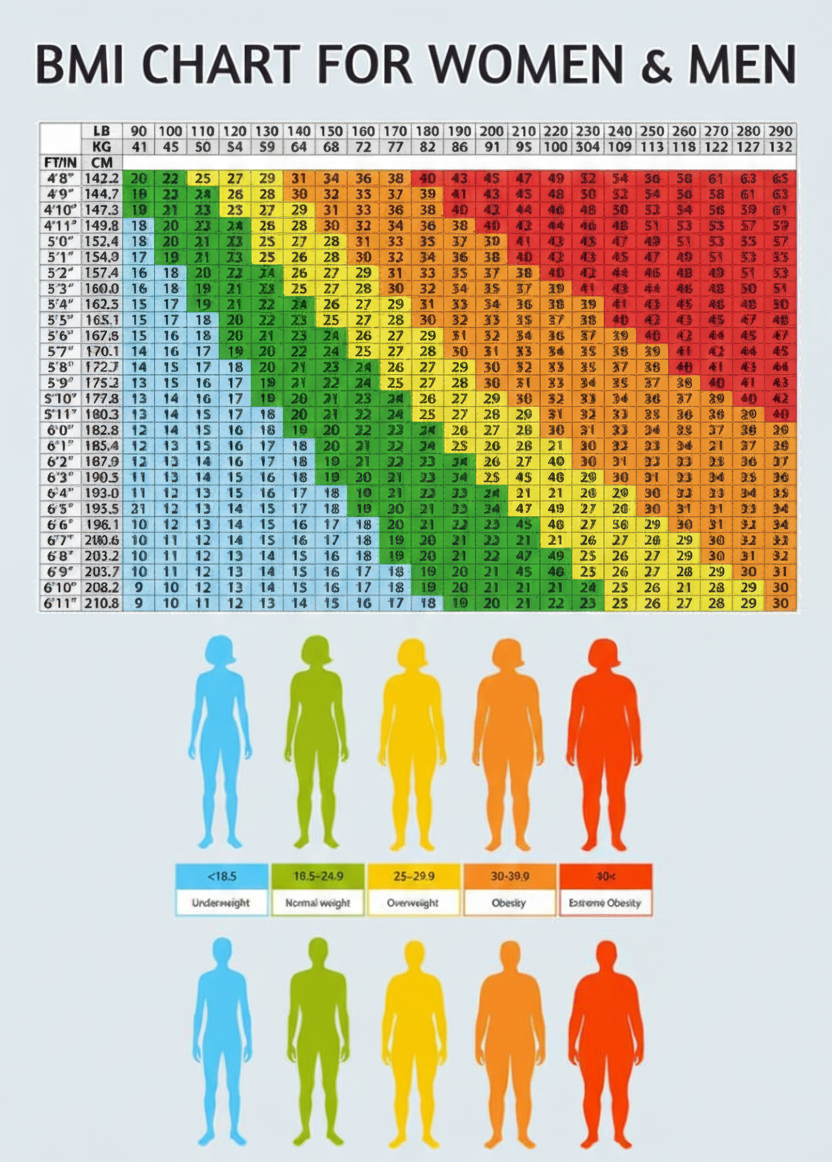
The World Health Organization classifies BMI into the following categories for adults aged 20 and older:
| BMI Range | Category | Health Risk | Recommendation |
|---|---|---|---|
| Below 18.5 | Underweight | Increased risk of malnutrition, osteoporosis, anemia | Consult doctor, increase calorie intake, strength training |
| 18.5 - 24.9 | Normal Weight | Lowest health risk | Maintain current weight with balanced diet and exercise |
| 25.0 - 29.9 | Overweight | Moderate risk of heart disease, diabetes, hypertension | Lose 5-10% body weight, increase physical activity |
| 30.0 - 34.9 | Obese Class I | High risk of chronic diseases | Medical supervision recommended, lifestyle changes needed |
| 35.0 - 39.9 | Obese Class II | Very high risk of serious health conditions | Immediate medical intervention, consider weight loss programs |
| 40.0 and above | Obese Class III (Severe) | Extremely high risk, life-threatening complications | Urgent medical care, may require bariatric surgery evaluation |
Source: World Health Organization (WHO) BMI Classification
How to Use the BMI Calculator
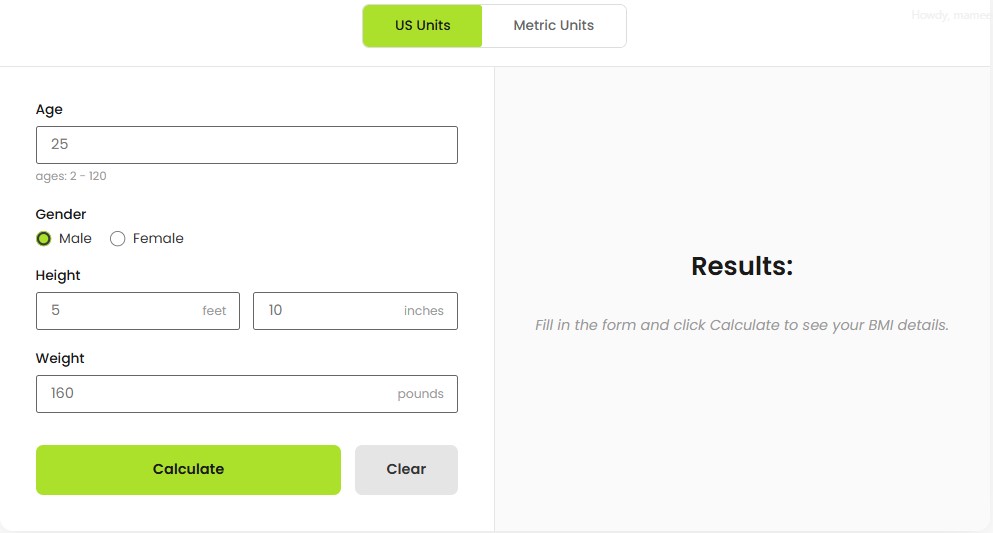
Step 1: Choose Your Unit System
Select either Metric (kilograms and centimeters) or Imperial (pounds and feet/inches)
depending on your preference. The calculator automatically converts between units for accurate results.
Step 2: Enter Your Height
Input your height in the selected unit system:
- Metric: Enter height in centimeters (e.g., 175 cm)
- Imperial: Enter feet and inches separately (e.g., 5 feet 9 inches)
Tip: Measure your height without shoes for accuracy. Stand straight against a wall
and use a flat object (like a book) on your head to mark the height.
Step 3: Enter Your Weight
Input your current weight:
- Metric: Enter weight in kilograms (e.g., 70 kg)
- Imperial: Enter weight in pounds (e.g., 154 lbs)
Tip: Weigh yourself in the morning before eating for the most consistent results.
Use the same scale each time you measure.
Step 4: Calculate and Review Results
Click the “Calculate BMI” button to instantly see your results. The calculator displays:
- Your exact BMI value (e.g., 23.4)
- Your weight category (Underweight, Normal, Overweight, or Obese)
- Health risk assessment based on your BMI
- Personalized recommendations for your category
Understanding Your BMI Results
What Does My BMI Number Mean?
Your BMI number is a ratio that compares your weight to your height. It’s expressed as a single
number that falls into one of the weight categories defined by health organizations. Here’s what
different BMI ranges indicate:
BMI Examples:
- BMI 17.0: Significantly underweight – may indicate malnutrition or eating disorder
- BMI 22.0: Ideal healthy weight – associated with lowest mortality risk
- BMI 27.5: Overweight – beginning to increase health risks
- BMI 32.0: Obese – significantly elevated risk of chronic diseases
- BMI 42.0: Severely obese – immediate medical attention recommended
BMI Limitations and Considerations
While BMI is a useful screening tool, it has important limitations you should understand:
When BMI May Not Be Accurate:
- Athletes and Bodybuilders: High muscle mass can result in high BMI despite low body fat
- Older Adults: Loss of muscle mass with age may give falsely low BMI
- Pregnant Women: BMI doesn’t account for pregnancy weight gain
- Children and Teens: Require age and gender-specific BMI percentile charts
- Different Ethnicities: Asian populations may have higher health risks at lower BMI values
- Body Composition: Doesn’t distinguish between muscle, bone, and fat mass
Better Alternatives to BMI:
For a more complete picture of your health, consider these additional measurements:
- Body Fat Percentage: Measures actual fat vs. lean mass
- Waist Circumference: Indicates abdominal fat, linked to heart disease risk
- Waist-to-Hip Ratio: Assesses fat distribution patterns
- Waist-to-Height Ratio: More accurate than BMI for cardiovascular risk
- DEXA Scan: Gold standard for body composition analysis
BMI Formula and Calculation
Metric BMI Formula
BMI = weight (kg) / height (m)²
Metric Example:
If you weigh 70 kg and your height is 1.75 meters:
- Square your height: 1.75 × 1.75 = 3.0625 m²
- Divide weight by height squared: 70 ÷ 3.0625 = 22.86
- Your BMI = 22.86 (Normal weight category)
Imperial BMI Formula
BMI = (weight in pounds / height in inches²) × 703
Imperial Example:
If you weigh 154 pounds and your height is 69 inches (5 feet 9 inches):
- Square your height: 69 × 69 = 4,761 inches²
- Divide weight by height squared: 154 ÷ 4,761 = 0.03235
- Multiply by 703: 0.03235 × 703 = 22.74
- Your BMI = 22.74 (Normal weight category)
Why Multiply by 703?
The number 703 is a conversion factor that makes the imperial formula equivalent to the metric formula. It converts the result from pounds/inches² to match the kg/m² standard used internationally.
Health Implications of Different BMI Ranges
Underweight (BMI Below 18.5)
Being underweight can be just as unhealthy as being overweight. Health risks include:
- Weakened immune system: More susceptible to infections and illnesses
- Osteoporosis: Reduced bone density leading to fractures
- Anemia: Low iron levels causing fatigue and weakness
- Fertility issues: Irregular menstrual cycles in women
- Malnutrition: Vitamin and mineral deficiencies
Action Steps: Consult a healthcare provider, increase calorie intake with nutrient-dense foods, consider strength training to build muscle mass.
Normal Weight (BMI 18.5-24.9)
This range is associated with the lowest risk of weight-related diseases. Benefits include:
- Optimal health: Reduced risk of chronic diseases
- Better energy levels: Improved physical performance
- Healthy metabolism: Efficient nutrient processing
- Lower healthcare costs: Fewer medical interventions needed
Action Steps: Maintain your weight through balanced diet and regular exercise (150 minutes moderate activity per week).
Overweight (BMI 25-29.9)
Overweight status increases risk of several health conditions:
- Type 2 Diabetes: Insulin resistance and blood sugar problems
- High Blood Pressure: Increased cardiovascular strain
- Heart Disease: Elevated cholesterol and arterial plaque
- Sleep Apnea: Breathing interruptions during sleep
- Joint Problems: Increased stress on knees, hips, and back
Action Steps: Aim to lose 5-10% of body weight through diet and exercise. Even modest weight loss significantly reduces health risks.
Obese (BMI 30 and Above)
Obesity significantly increases risk of serious health conditions:
- Cardiovascular Disease: Heart attacks and strokes
- Type 2 Diabetes: High likelihood of developing diabetes
- Certain Cancers: Breast, colon, kidney, liver, and pancreatic cancers
- Fatty Liver Disease: Liver damage and dysfunction
- Gallbladder Disease: Gallstones and inflammation
- Mental Health: Depression, anxiety, and low self-esteem
- Reduced Life Expectancy: Shortened lifespan compared to healthy weight
Action Steps: Seek medical supervision for weight loss plan. Consider comprehensive programs including diet, exercise, behavioral therapy, and possibly medication or surgery for severe obesity.
If you use US measurements, you first convert your height to total inches. For example, 5 feet 10 inches becomes 70 inches. Then you square this number. Multiply your weight in pounds by 703, then divide by your height in inches squared. This gives you your BMI value.
Tips for Achieving and Maintaining a Healthy BMI
For Weight Loss (If Overweight or Obese):
- Create a Calorie Deficit: Use our Calorie Calculator
to find your daily needs, then eat 500-750 calories less per day for 1-1.5 lbs weekly weight loss. - Eat Whole Foods: Focus on vegetables, fruits, lean proteins, whole grains, and healthy fats.
Minimize processed foods, sugary drinks, and refined carbohydrates. - Practice Portion Control: Use smaller plates, measure serving sizes, and eat slowly to
recognize fullness signals. - Increase Physical Activity: Aim for 150-300 minutes of moderate exercise weekly. Combine
cardio (walking, cycling, swimming) with strength training 2-3 times per week. - Stay Hydrated: Drink 8-10 glasses of water daily. Sometimes thirst is mistaken for hunger.
- Get Adequate Sleep: Aim for 7-9 hours nightly. Poor sleep disrupts hunger hormones and
increases cravings. - Track Your Progress: Weigh yourself weekly, take measurements, and use our BMI calculator
monthly to monitor changes. - Seek Support: Join weight loss groups, work with a dietitian, or find an accountability partner.
For Weight Gain (If Underweight):
- Increase Calorie Intake: Eat 300-500 extra calories daily from nutrient-dense foods, not junk food.
- Eat More Frequently: Have 5-6 smaller meals throughout the day instead of 3 large meals.
- Choose Calorie-Dense Foods: Nuts, nut butters, avocados, whole milk, cheese, dried fruits,
and healthy oils add calories without excessive volume. - Strength Training: Build muscle mass with resistance exercises 3-4 times weekly.
- Protein at Every Meal: Include lean meats, fish, eggs, dairy, legumes, or protein shakes
to support muscle growth. - Limit Empty Calories: Avoid filling up on low-calorie vegetables; balance with energy-dense options.
- Medical Evaluation: Rule out underlying conditions causing underweight (thyroid issues,
digestive problems, eating disorders).
For Maintaining Healthy Weight:
- Consistent Eating Patterns: Eat at regular times and avoid skipping meals
- 80/20 Rule: Eat healthy 80% of the time, allow treats 20% for sustainability
- Regular Exercise: Make physical activity a non-negotiable part of your routine
- Stress Management: Practice meditation, yoga, or hobbies to prevent stress eating
- Regular Monitoring: Check your BMI every 3-6 months to catch changes early
Frequently Asked Questions About BMI
A healthy BMI range for adults is 18.5 to 24.9 according to the World Health Organization. BMI below 18.5 is considered underweight, 25 to 29.9 is overweight, and 30 or above is obese. This range is associated with the lowest risk of weight-related diseases and mortality.
BMI is a useful screening tool but not perfect. It doesn't distinguish between muscle and fat mass, so athletes with high muscle mass may have a high BMI despite being healthy. For most people, BMI provides a reasonable estimate of body fat and health risks. For more accuracy, consider body fat percentage, waist circumference, or waist-to-height ratio alongside BMI.
The BMI calculation formula is the same for men and women. However, women naturally have more body fat than men (about 10-12% more), so the same BMI may represent different body fat percentages. Despite this, the same BMI categories (underweight, normal, overweight, obese) apply to both genders for health risk assessment.
BMI for children and teens (ages 2-19) is calculated the same way but interpreted differently using age and gender-specific percentile charts. Children's BMI changes as they grow, so percentiles compared to other children of the same age and gender are used instead of fixed categories. Use CDC BMI-for-age charts for children rather than adult BMI categories.
If your BMI is outside the healthy range, consult with a healthcare provider or registered dietitian. They can assess your overall health, body composition, and recommend personalized diet and exercise plans. Don't make drastic changes without professional guidance. Even a 5-10% weight change can significantly improve health markers.
Check your BMI every 3-6 months if you're actively trying to lose or gain weight. For weight maintenance, checking every 6-12 months is sufficient. Regular monitoring helps you catch changes early and adjust your lifestyle habits before significant weight gain or loss occurs.
BMI calculation doesn't change with age for adults, but body composition does. Older adults naturally lose muscle mass (sarcopenia) and may have higher body fat at the same BMI. Some research suggests slightly higher BMI (25-27) may be healthier for adults over 65, but this is still debated. Consult your doctor about appropriate weight ranges for your age.
While BMI categories are standardized, health risks vary by ethnicity. Asian populations tend to have higher body fat percentages and greater health risks at lower BMI values. WHO recommends lower cutoffs for Asian populations: overweight at BMI 23 and obese at BMI 27.5. African Americans may have lower health risks at higher BMI due to greater muscle mass. Discuss ethnicity-specific considerations with your healthcare provider.
Studies show BMI in the normal range (18.5-24.9) is associated with the lowest mortality risk. Both underweight (BMI below 18.5) and obesity (BMI above 30) are linked to shorter lifespans. However, BMI is just one factor - fitness level, diet quality, smoking, genetics, and chronic conditions also significantly affect longevity. A healthy lifestyle matters more than BMI alone.
Have more questions?
Visit our FAQ page or contact us for personalized assistance.
Related Health Calculators
Get a complete picture of your health with these complementary calculators:
Calculate your body fat percentage using the US Navy method. More accurate than BMI for understanding body composition, especially for athletes and fitness enthusiasts.
Find your daily calorie needs based on age, weight, height, and activity level. Essential for weight loss, weight gain, or maintenance goals.
Calculate your due date, conception date, and track pregnancy milestones. Note: BMI affects pregnancy health and weight gain recommendations.