
Bearded Dragon Health plays a major role in choosing the right daily diet for your Bearded Dragon. As you walk through the fruits and vegetable aisle, you may ask yourself whether that green leafy head of collards could be considered a super food for your reptilian companion or simply an unnecessary expense. Deciding on exactly what your beardies need in their diet takes both art and science.
From reptile vets comes the absolute requirement of the adult beardie’s diet – it needs to follow an exact 80/20 rule, where 80 percent is greens and 20 percent is insects. Providing an exciting salad buffet rather than just feeding the same old cricket daily keeps your pet from getting bored and developing nutritional diseases.
Knowing how to get this right helps ensure proper calcium intake. Use that free calculator for reptile food & Cost Calculator.
The Daily Salad Bar: Why Dark Leafy Greens Beat Iceberg Lettuce for Long-Term Health
Given the fact that mature dragons flourish by following the principle of 80/20, in which the diet consists of plants, there may be a temptation to simply throw regular iceberg lettuce to them. However, do not fall for this trap! Although it appears to be harmless enough, an iceberg consists of only crunch with no nutrients at all, thus causing digestive problems for your pet.
When choosing what kind of greens to offer your bearded dragon, think about nutrient-packed foods. In order to establish a convenient greens chart for your fridge door, consider stocking up on these five greens:
- Collard greens
- Mustard greens
- Turnip greens
- Dandelion greens
- Endive
This will ensure that there is a calcium base available to help their bones grow. In addition, giving these foods is the most effective method of hydrating your beardies using fresh vegetables since they can extract water from the vegetables while chewing on them. It will also enhance the food if you sprinkle some fresh butternut squash to introduce the essential vitamin A to your dragon’s diet.
After balancing their vegetable intake, you now need to address the rest of the 20% on their plates. Dealing with their insects requires a certain level of strategy.
Mastering the Protein Hunt: Why Dubia Roaches and 'Gut Loading' Are Vital for Vitality
The health of your dragon depends entirely on the insects they eat. It becomes vital to know how to gut-load your feeder insects at all times during their 24-hour cycle. You can visualize live insects as mere carriers of nutritious components. Whatever nutritious vegetables you introduce into them before feeding will transfer directly to your pet reptile.
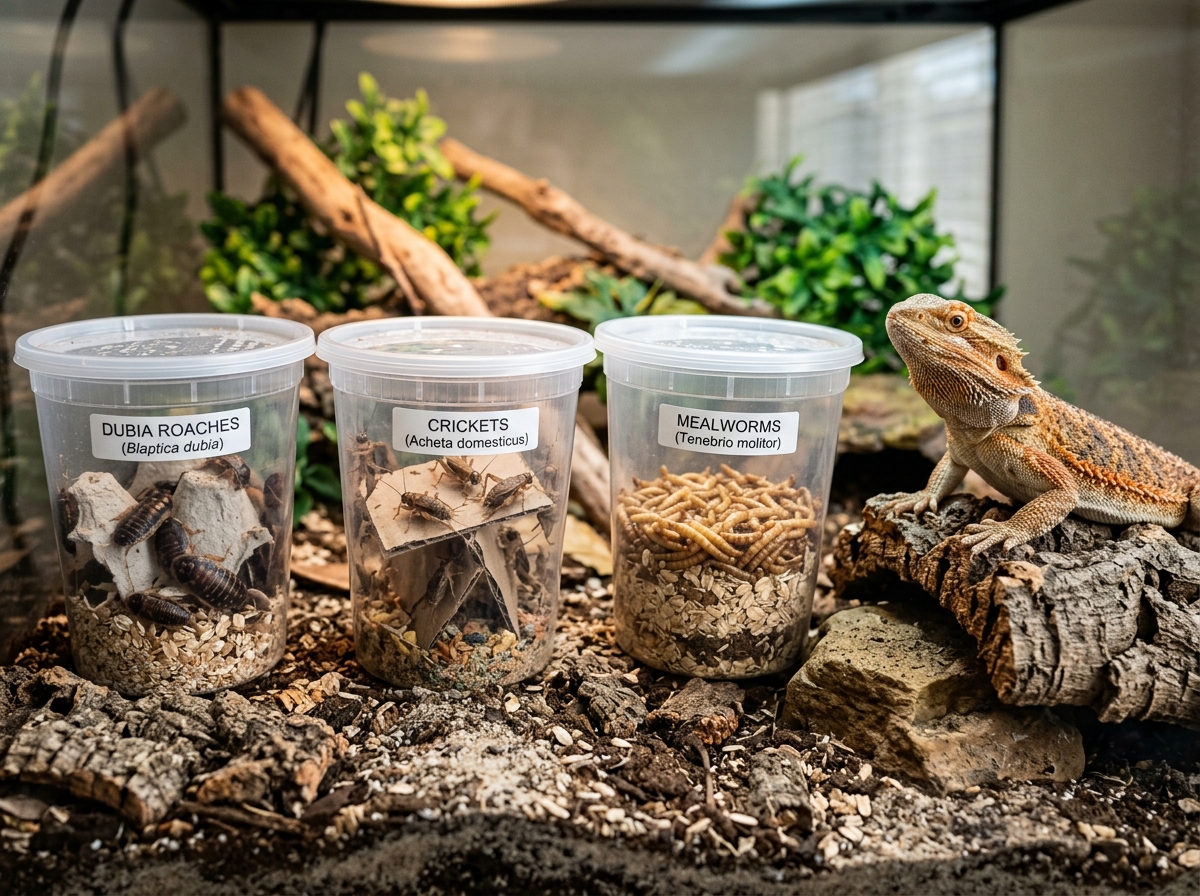
To supply the ideal staple insects for bearded dragons, it is essential to consider high-protein insects. Here is a quick comparison of the different options available before heading out to purchase more:
- Dubia Roaches: The ideal staple food option. Compared to mealworms versus crickets, roaches have more protein content, low fat, and an easy-to-digest exoskeleton.
- Crickets: They serve as a hydration source that promotes healthy hunting behavior.
- Mealworms: They are too fatty to eat and should serve as rare treats for your dragon.
It is important to exercise additional care when introducing sufficient proteins into young bearded dragons. The most dangerous factor about these insects is the hard shell covering the body. Mealworms contain a thick outer shell consisting of chitin (ky-tin). It leads to digestive tract obstructions, causing death. Despite feeding your pets soft-bodied and gut-loaded insects to receive proper nutrition, your bearded dragon needs one additional factor for robust skeletal development.
The 'Lock and Key' of Bone Health: Why Calcium and D3 Supplementation is Non-Negotiable
Despite the quality of the feeder insect species, one issue remains consistent: too much phosphorus and not enough calcium. To correct this imbalance in the calcium-to-phosphorus ratio, lightly dust their food with mineral supplements. Similar to dusting with powdered sugar on a pastry, this step is crucial for constructing healthy bones.
Without absorbing this supplement, eating it would be meaningless. Calcium is used in the formation of bones, but bearded dragon vitamin D3 and UVB lights serve as the key in unlocking the process. Without this key, their bones become extremely fragile and flexible. Early detection of metabolic bone disease in reptiles, such as twitching toes or lethargic behavior, can prevent irreparable damage through proper medical care.
Knowing how to construct your core nutrition knowledge will give you the skills necessary to indulge in delicious desserts without falling victim to deceptively deadly dangers.
Sweet Treats and Hidden Hazards: Navigating Fruits, Pears, and Kitchen Scraps
Providing fresh fruit is always rewarding; however, it’s crucial to consume in moderation. Since they lack the ability to digest large amounts of sugar, too many sweets lead to fructose obesity. Are bearded dragons able to eat pears or cherries? Absolutely! They are some of the most popular choices for reptile treats if you don’t exceed 10% of the total diet in fruit.
Apart from sugars, seemingly harmless greens contain substances called oxalates that prevent calcium from getting absorbed into bones by acting as magnets. More severe than oxalates are toxins. Remember these foods that belong to the “Red Zone” and are not recommended to feed bearded dragons at all:
- Avocados and Rhubarb – extremely poisonous and can kill.
- Potatoes – high levels of starchy content make them dangerous.
- Celery Leaves – high concentration of oxalates makes them unsuitable.
Keeping them away from this list of common household foods ensures they will remain healthy in the long run and allows establishing an effective feeding schedule.
Setting Your Dragon’s Menu: A 3-Step Action Plan for a Healthier Life
Once you have planned your grocery shopping list, you will never have to second-guess again about the dietary needs of bearded dragons. It is good that you already know the precise list of greens you can feed your beardie on a daily basis.
Introduce one more type of food at a time based on your safe list of greens for bearded dragons. Pay attention to the behavior of your pet and observe the results. Soon you will see what excellent nutrition gives – colorful appearance and healthy bone development.