
Environment Settings (optional — defaults applied)
Need to know how much food your reptile needs, or how much money it is costing you per month to feed it? The free calculator for feeding reptiles gives an accurate calculation of how much food your reptile needs according to its species, age, and size, and then tells you how much this is costing you each month. Be it a bearded dragon, leopard gecko, ball python, or tortoise, this calculator will come handy for you!
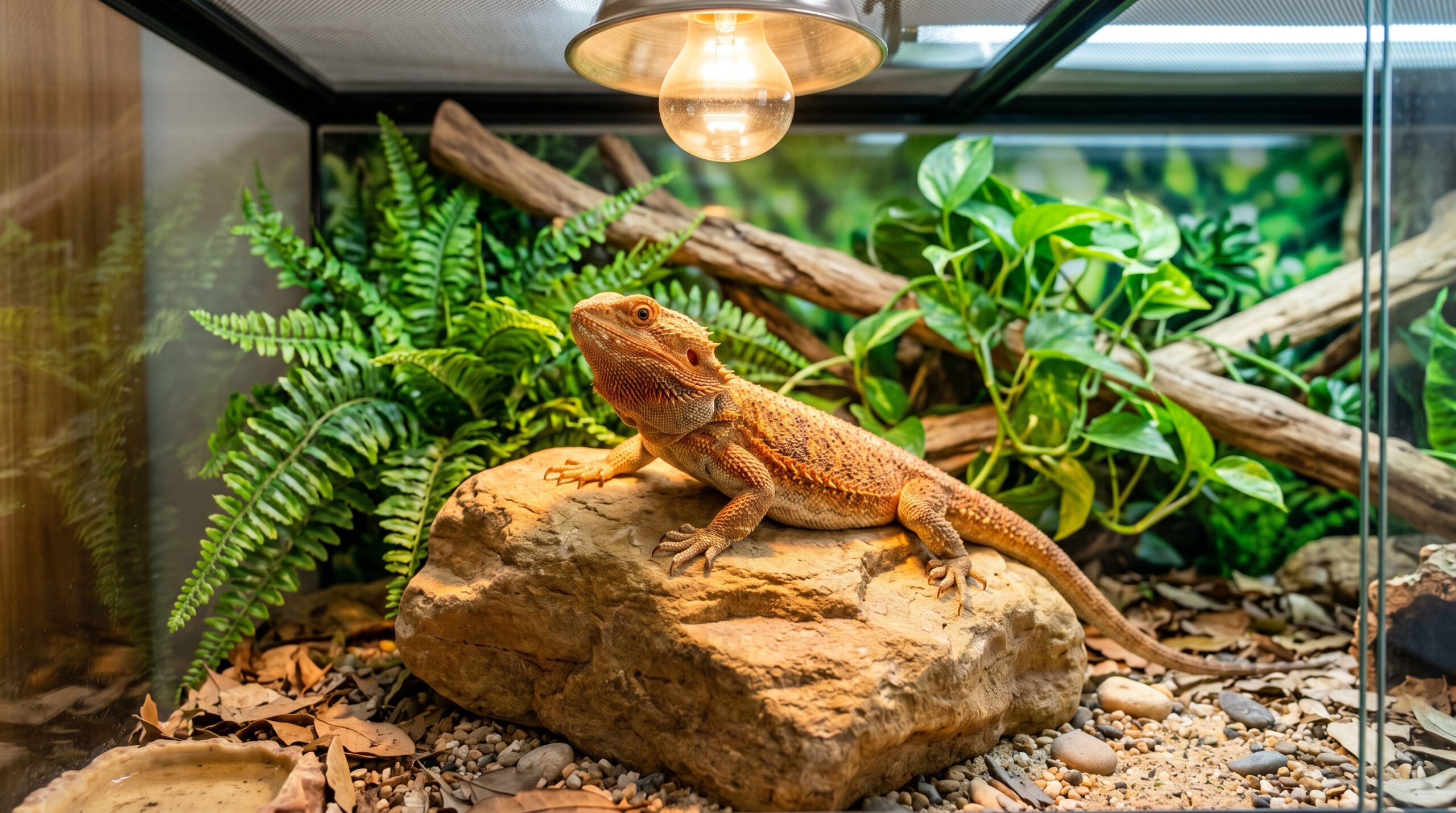
The Reptile Feeding & Cost Calculator is a free web-based tool designed to help reptile owners determine the correct feeding schedule and estimate their monthly feeder costs — all based on their specific reptile’s species, age, and weight.
Unlike generic care sheets that give you one-size-fits-all advice, this calculator factors in:
According to the Association of Reptile and Amphibian Veterinarians (ARAV), improper nutrition is one of the leading causes of health problems in captive reptiles. This tool helps you stay on track from day one.
It only takes minutes to use the calculator. Fill out the form below and instantly see how much food your reptile needs and how expensive the feeders will be per month.
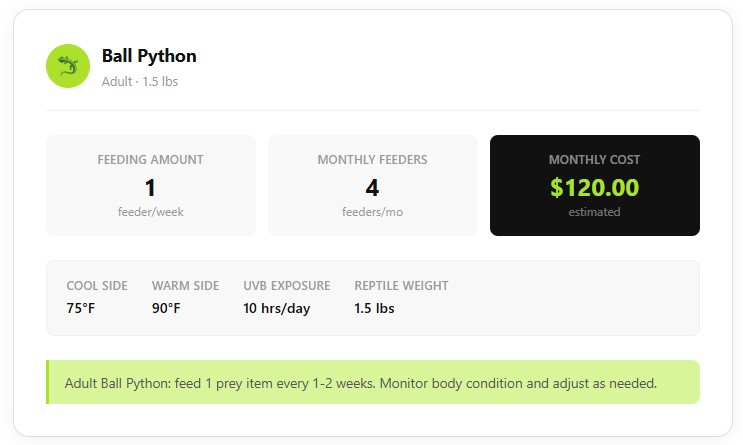
First thing is to enter the weight of your reptile. The more weight the animal has, the more food it requires. The weight is the most critical parameter for the calculator to calculate portion sizes.
From the dropdown, choose the species of your reptile – bearded dragon, leopard gecko, ball python, corn snake, tortoise, iguana, chameleon, monitor lizard, or any other supported species. Different species have varying nutritional requirements. Thus, making the above selection will help in modifying the feeding equation used in the background of the calculator.
The appetite and feeding frequency of your pet depend on the age of your reptile. Younger reptiles need to be fed more often with smaller amounts of food compared to mature ones who need less frequent but bigger amounts of food. Age should be provided in either exact or estimated terms for your pet.
Next, provide the calculator with information about the feeding schedule for your reptile – how many times it should be fed a day, every other day, two days a week, etc.
Lastly, input the cost of your feeder insects or food that you use for your reptile, per unit or per dozen or whatever amount you buy.
After submitting your information, the calculator immediately calculates your reptile’s feeding quantity along with your estimated monthly reptile feeding cost. The purpose of this reptile feeding cost calculator is to provide you with an estimate of the reptile food cost that is realistic instead of the general average, since both a juvenile leopard gecko and a full-grown monitor lizard would require varying feeder costs. Using this reptile food calculator at frequent intervals (such as when the cost of feeders changes or your reptile grows up) is recommended.
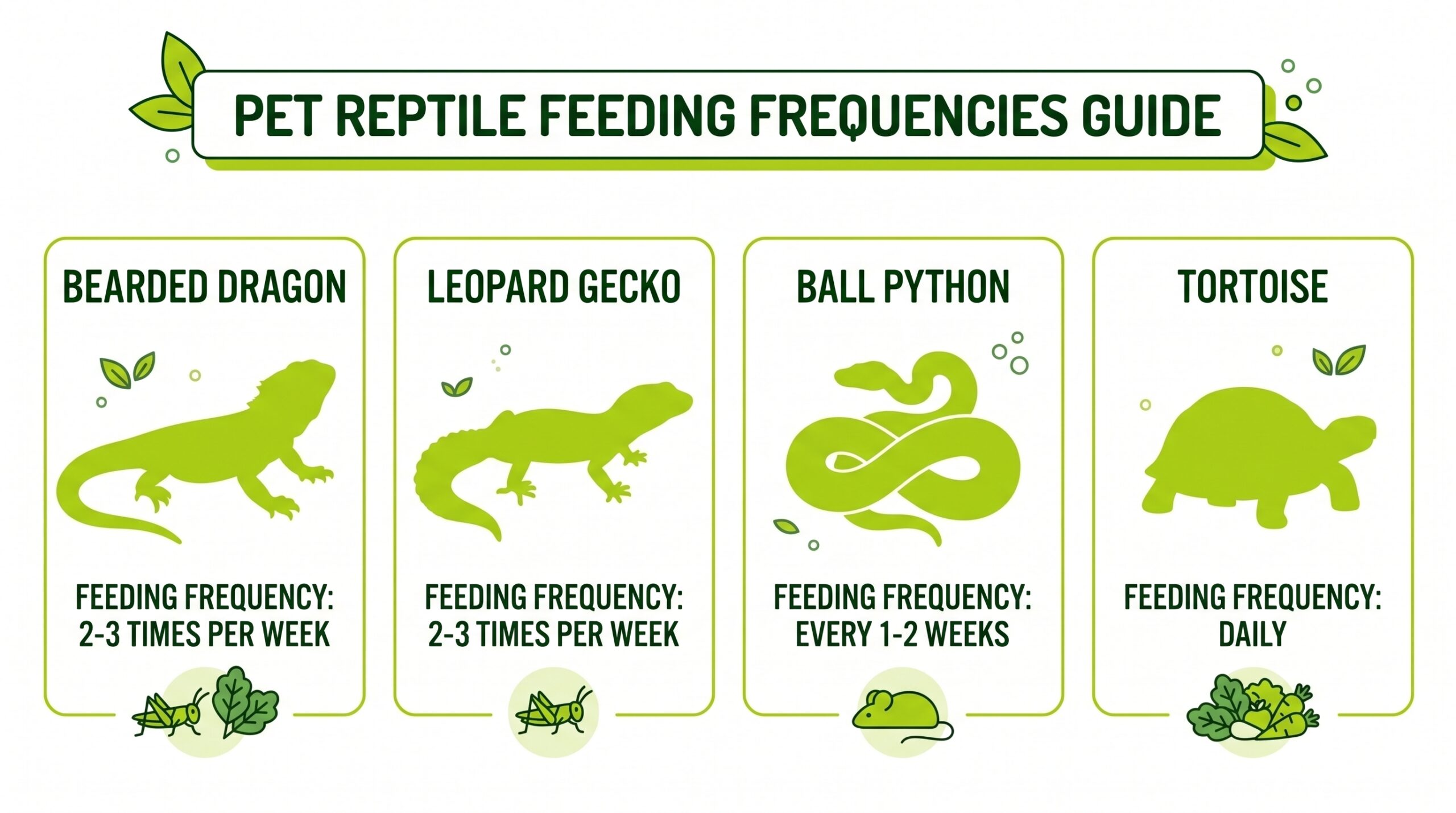
Feeding needs vary significantly across reptile species. Below is a quick feeding overview for the most commonly kept pet reptiles – use it alongside the calculator above for a complete picture.
Bearded dragons are omnivores, and in order to feed juvenile bearded dragons, you must give them feeder insects for bearded dragons, along with leafy greens. The common question asked by many keepers is how many mealworms to give a bearded dragon. On average, juveniles will consume 20-30 small-sized insects per day, and adult dragons require few insects but plenty of vegetables. In any case, always remember to dust insects with calcium powder before feeding.
Leopard geckos are considered insectivores, and they mainly require leopard gecko feeder insects like crickets, mealworms, and dubia roaches. A very common question asked by many keepers is how often do you feed a gecko. Juveniles will require feeding every day, while the adults do fine with feeding once every two days or even twice a week. If you are wondering about how often to feed gecko as it grows into adult, increase the period between feeding.
Ball pythons are not fed insects; they are fed appropriately sized rodents. Ball python babies usually eat every five-seven days, while adults eat once every one-two weeks. Again, feeding frequency depends upon the physical condition of the snake, not the calendar date.
Corn snakes have similar eating habits as ball pythons, where appropriately sized rodents are provided every five-ten days for juveniles, and once every one-two weeks for adults.
Pet tortoises are primarily herbivorous animals, hence require feeding daily using mostly leafy greens, weeds, and a little bit of vegetables. Pet owners must not feed tortoises with fruits regularly since they may become obese as a result, while at the same time pellets may complement but not take the place of fresh greens.
Iguanas are pure herbivores and hence their daily diet should include dark green leafy vegetables, some fruits and vegetables. One unique feature about iguanas is that they cannot be fed meat proteins, insects, or anything else apart from the plants.
Chameleons are insectivores and hence they thrive in diets of gut loaded feeder insects. Young chameleons must be fed daily, while the adult chameleons will be fine when fed every one or two days depending on their appetite.
Monitor lizards are big and active carnivores and hence require high food intake. Monitor lizard diets will comprise lean protein and whole prey which will be fed several times a week.
Live insect feeders are the core of the diet for the vast majority of insectivorous reptiles kept as pets. There are many common types of live insect feeders that provide a variety of nutritional values; some examples are crickets, mealworms, dubia roaches, black soldier fly larvae, and waxworms. Live insects are better for reptiles than either pre-killed or dried insects because movement of the prey stimulates the hunting instinct of most animals. In addition to insects, there are some feeders among small animals; for example, the diet of some reptiles includes appropriate sized rodents. Whatever feeders you select, they should be gut-loaded prior to being fed to the reptile.
Overfeeding reptiles causes obesity, fatty liver disease, and shortened lifespan. Underfeeding leads to malnutrition and stunted growth. The calculator gives you the scientifically appropriate amount for your reptile’s exact life stage.
Buying too many feeders leads to waste. The monthly cost estimate helps you shop smarter – buying the right quantity at the right time, avoiding spoilage and unnecessary expense.
Unlike reading through multiple care sheets, this tool gives you a single, clear answer tailored to your specific reptile in under 10 seconds.
From the humble Leopard Gecko to the impressive Monitor Lizard, the calculator covers the eight most commonly kept reptile species in captivity.
Most online guides ignore age differences. This calculator treats a 3-month-old Bearded Dragon completely differently from a 3-year-old adult – because they are completely different animals in terms of nutritional needs.
Reptile keeping has hidden costs. Knowing your monthly feeder cost upfront helps you plan your pet budget realistically alongside electricity (heating/UVB), substrate, and veterinary care.
The optional temperature and UVB inputs give you a reference check every time you calculate – reminding you to verify your enclosure conditions alongside your feeding routine.
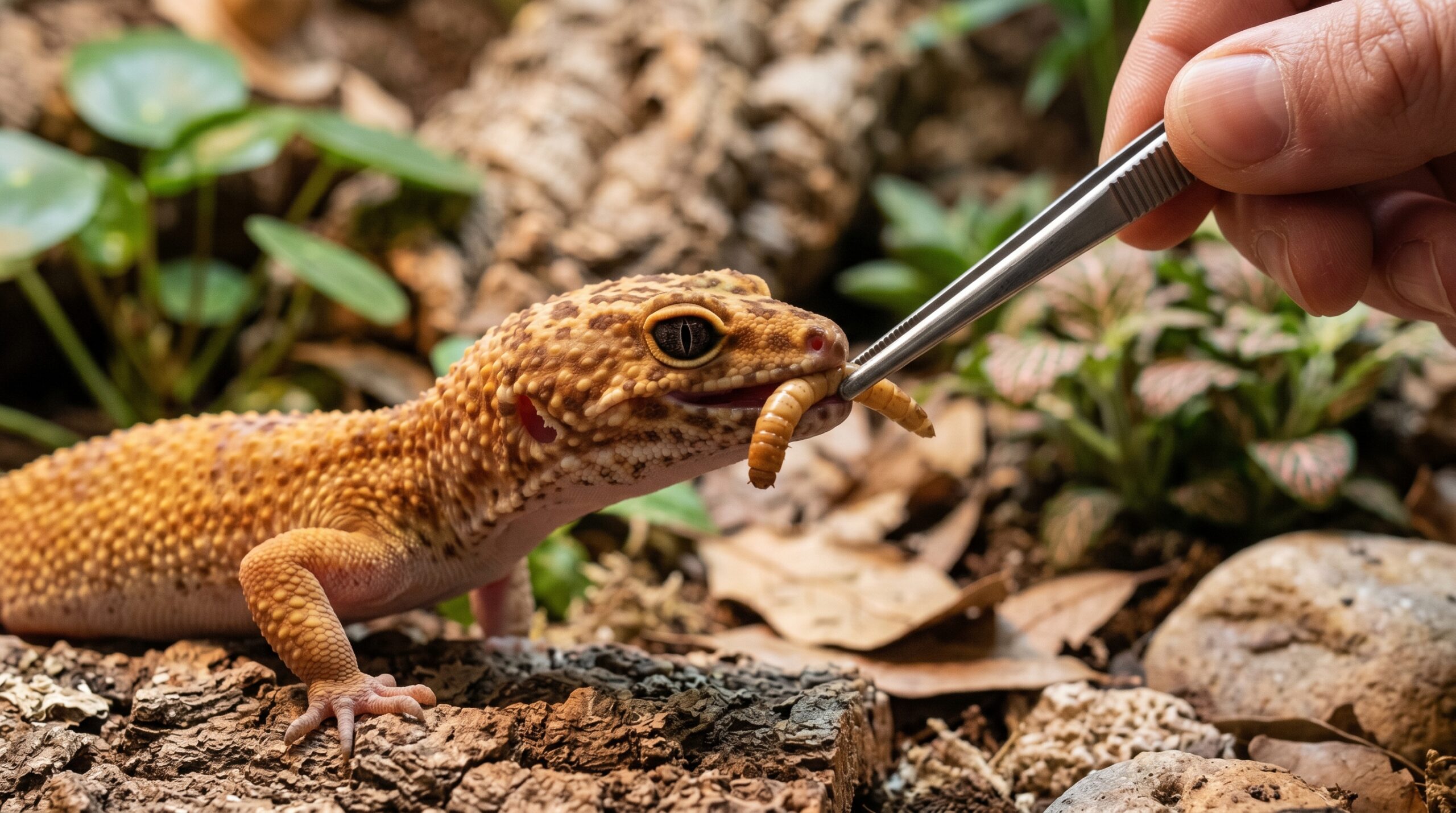
There is a huge difference in the reptile feeding cost based on the type of species, their sizes, and the frequency of feeding. Species that feed on insects, such as leopard geckos and bearded dragons, for instance, have a lower reptile feeding cost than larger carnivorous species, like monitors, simply because they consume fewer amounts during feeding sessions. Herbivorous species, including tortoises and iguanas, have a low reptile feeding cost compared to other species because the food is less expensive than insect feeders and complete prey animals. The cost of feeder insects can also vary depending on the time of year.
Even experienced keepers fall into these traps. Use the calculator regularly to stay on track.
Yes. The Reptile Feeding & Cost Calculator is completely free. No account, no subscription, no hidden fees.
The recommendations are based on widely accepted reptile husbandry guidelines and species-specific research. However, every individual animal is different. Use the results as a starting point and consult a qualified reptile veterinarian if you have concerns about your animal's health or appetite.
For species not in the dropdown, select the closest similar species or use the custom feeding frequency field with your own research-based numbers.
It is the cost of a single feeder item - one cricket, one mealworm, one frozen mouse, etc. Divide the total pack price by the quantity to get your per-feeder price.
Currently the calculator focuses on feeder quantity and cost. Supplement costs (calcium, multivitamins) are not included but can be added manually to your monthly budget.
Feeding a reptile correctly is not guesswork – it is science. The right amount of food at the right life stage makes the difference between a thriving, healthy animal and one that struggles with health issues caused by improper nutrition.
The Reptile Feeding & Cost Calculator takes the complexity out of reptile nutrition. In under two minutes, you get a feeding plan tailored to your specific animal, a monthly quantity estimate so you never run out of feeders, and a cost projection that helps you budget responsibly.
Whether you keep a baby Bearded Dragon or a full-grown Monitor Lizard, this tool is designed to support you at every stage of reptile ownership. Use it regularly as your reptile grows and its needs change, and always combine its output with advice from a qualified reptile veterinarian for the best outcomes.
© 2026 CalcVersa. All rights reserved.